During the February half term I travelled to Hungary on the next stage of my social cohesion project to link schools in the West Midlands with schools in Budapest, Hungary.

You may recall during the latter part of 2016, my fund raising for this visit was successful, and I set out my aims and objectives of this social cohesion project in my earlier blog post – hyperlink:
https://lifeatdivisionnasuwt.wordpress.com/2016/10/12/social-enterprise-visit-hungary-16/
As such on Monday 20th February I flew with Jet2 from East Midlands to Budapest.


Jet2 had kindly donated flights to support my project, which was pleasing to find that such a large multi-national organization has the corporate ethics and beliefs in wishing to improve the situation of its customers and societies it serves though projects such as my own.
I flew out with them at 2.40pm and arrived just 2 hours later in “deepest darkest Eastern Europe”.
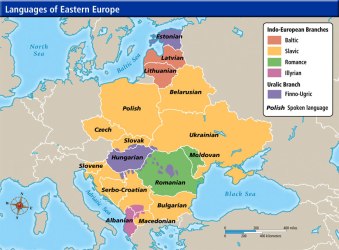
My first challenge was to navigate my way from the airport to Budapest City Centre, a taxi from the airport would of cost me around 25euros, but as I was on a limited budget and wanted to maximize the monies from my crowd funding donations and support I dived into the local public transport network. Straight away the differences when comparing the UK’s public transport with the Hungarian public transport was startling.
The bus to the nearest metro station was clean, efficient, ran frequently, offered notifications to passengers in three languages (Hungarian, English & French) and deposited me safely at the Metro station, where upon I jumped on a 50 year old+ train, straight out of central casting circular Communist Russia 1950’s that took me into the City.


In total this two stage journey took around 40 minutes and cost 300 Hungarian forint – less than £1.00
Once in downtown Budapest, I hopped onto the new modern & again efficient, air-conditioned underground system, where everyone was using their mobile phones or I-Pads, as the underground system is Wi-Fi connected, and travelled to my apartment near the metro station ‘Astoria’, again this third stage of my journey cost me 300 forint. (£1)
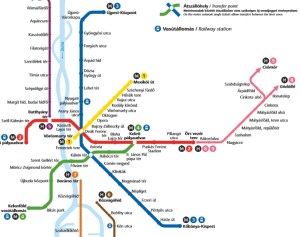

I clearly needed to revisit my preconceptions regarding Eastern Europe as my first impressions were of a country that is ‘on the move’ and embracing its role within modern Europe, and one that is served (at least in the capital city) by a very efficient public transport network system. I couldn’t but compare and contrast similar journeys on public transport in London, which are expensive, over crowded, hot and unreliable!
Post transcript – Colleagues In Hungary have highlighted to me that Hungarians view themselves as Central & not Eastern European, as such this is another area where I have had to adjust my thinking on the knowledge I had of this region, for more information see the following hyperlink and for all future blog posts, Hungary will be referred to as a Central European country.
https://www.reference.com/geography/countries-central-europe-2c9f976cf374aad6
http://www.nationsonline.org/oneworld/map/central-europe-map.htm
Once checked into my apartment, which was clean, well located and secure I headed back into the city to meet with some teachers/colleagues I would be working with over the next few days in various schools.
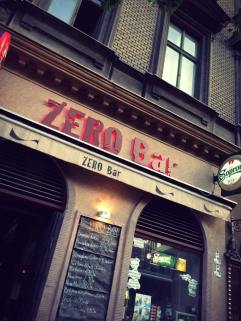
My first impressions of Budapest as I travelled to meet them is its a wonderful city, easy to navigate around and extremely cheap, as was proven with local beer costing less than a £1.oo a pint, because our meeting point was The Zero Bar, so called as you have zero chance of leaving there sober!
I met with Gordon, an English teacher from Harlow who has been working in Budapest for the last 10 years and who I was introduced to through Hungarian families living in Wolverhampton that knew and supported my project, alongside him was Betty who is a local lady from the city of Budapest who I met in London last year at an event through the English Speaking Union, both helped me make connections with various schools in Budapest, arrange meetings with The British Council to discuss School partnerships post Brexit and the loss of funding available to UK schools through the Erasmus+ programs. Betty’s former school had also arranged for me to meet the Mayor’s office of Kőbánya.
Gordon took me through the logistics of my itinerary for the week, explaining how I could utilize public transport, using the busses, trams, metro or trains to crisscross the city to my various locations, I scribbled furiously for example that I would need Metro line 2, then take a tram No 3, 62, or 62A to get one specific school, however it was either jetlag or the presence of copious amounts of cheap local beer in my system but I struggled to take in all the information being provided!
Then Gordon dropped the first of a few bombshells, schools start at 07.30am! By now it was past 1am in the morning, so I called it a night and headed back to my apartment.
The following morning I ventured back into the Hungarian public transport system and made my way to my first school placement, this being:
Szent László Gimnázium:
http://www.szlgbp.sulinet.hu/angolhonlap/index_angol.html
https://hu.wikipedia.org/wiki/Szent_L%C3%A1szl%C3%B3_Gimn%C3%A1zium
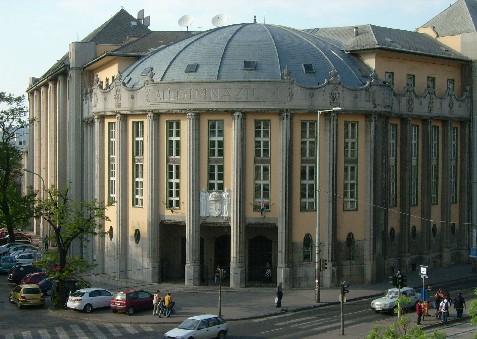
“Founded in 1907, Szent László Gimnázium (Secondary Grammar School) is located in Kőbánya, Budapest’s 10th District. The school’s building was designed by the renowned Hungarian architect Ödön Lechner, and has been in use since 1915. Szent László Gimnázium runs 25 classes with eight specialisations. It also offers evening classes for adults. Therefore, the school’s enrolment is approximately 1000 students each year.”
This was going to be my primary base, as I looked to connect this High School with Secondary schools in the West Midlands and also connect their primary schools (feeder schools) with similar at home.
(I did meet with other schools but for the purpose of the blog will discuss only my time at this school in depth)
The building itself is an impressive structure which dates back over 100 years and strikes you as you enter the large ornate doors into a wide lobby with sweeping marble floors. The building is steeped in history and tableaus of classes from previous year groups grace the walls, reminding me of Good Willing Hunting & the Carpe Diem Scene.


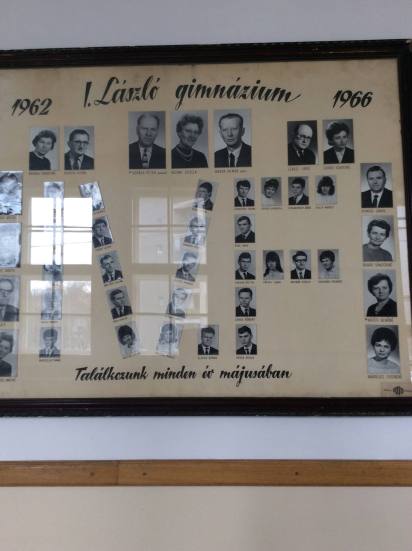
An interesting point is The Second World War disrupted the operation of the school as the building was used first by the German and then by the Soviet army as Hungary was engulfed by the War.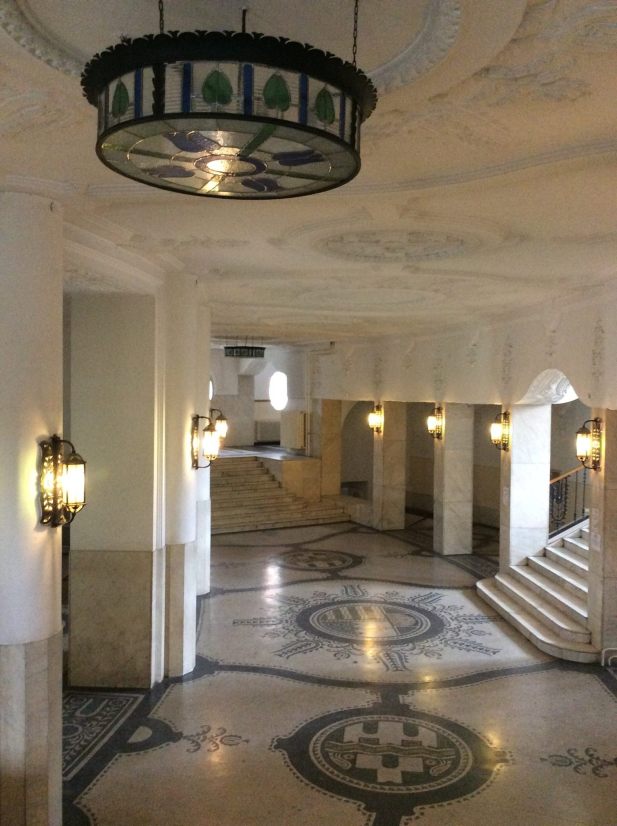
I met with Erica Huszar (who I had been in email contact with before my visit to discuss connecting schools together) and a number of her classes and was impressed by their dedication to their education, with lessons beginning at 07.30am and going through until 16.15pm.
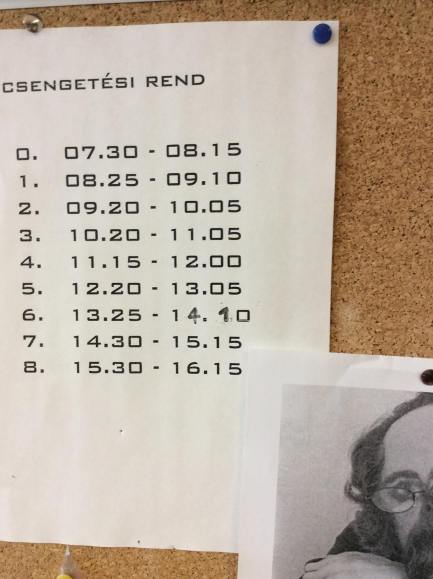
As I made my way through the school over the two days I spent there I observed the ebb & flow of the school life and was struck by how students clearly view education as a means to social mobility and a key question that was repeated during my visit both during formal lessons and informally when speaking with students & staff alike was how the “Brexit” vote will affect UK/Hungarian relations and what is life like for teenagers in school in the UK.


The students I met expressed to me that they were very keen to connect with schools in the West Midlands and build links together through student exchange programmes, as such I discussed with them the opportunities in our region, from Warwick Castle, to Stratford Upon Avon, to Liverpool & Manchester all being on our doorstep and the culturally and educational links these would offer.

Later that day I met with the School’s Sárkány Péter who after attending the school as a student began working there as a teacher and then as Igazgató or Director of the school, and we discussed over the strongest Hungarian coffee I have ever tasted which kept me awake for around 3 days how we might go about building exchange programmes and link both the school and its feeder schools together with counterparts in the West Midlands.
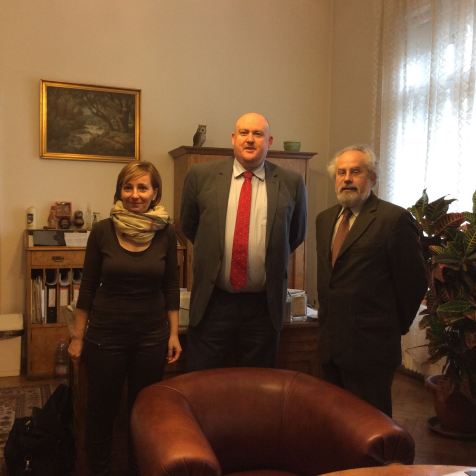
That afternoon was given over to some sightseeing of Budapest to explore and understand what the city can offer in return for students visiting as part of their exchange program, and of course there are wide ranging cross curriculum links, such as:
- The Jewish Ghetto (1944 onwards)
- The Hungarian revolution (1956)
- Understanding life under Communist control.
- Hungary vs. England football revolution (1953) ‘The Match of the Century’
- How Budapest is split geographically by the Danube & how the landscape shaped the two cities.
- The Hungarian Empire & Hungarian Parliament building.
Below are some of the educational sites I visited


Jewish Ghetto images


Communist statues at Memento Park


Puskas Stadium – https://en.wikipedia.org/wiki/Match_of_the_Century_(1953_England_v_Hungary_football_match)


The River Danube splitting the two locations of “Buda” & “Pes


The Hungarian Parliament Building
Whilst in Budapest I also visited with the British Council to discuss life after the European Referendum and life after Erasmus+. They were keen to understand how I had made the school connections and how funding this social enterprise project would occur.
https://www.erasmusplus.org.uk/
I also visited the International School of Budapest
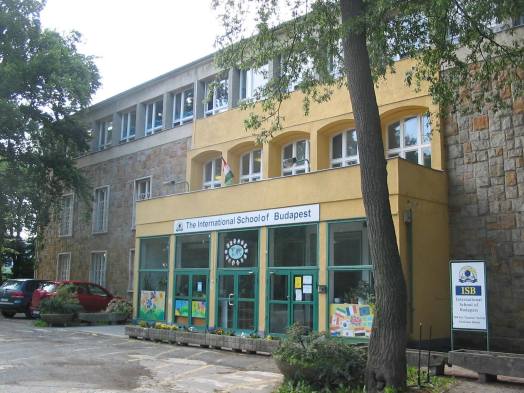
Visits during the week were also made to various Primary schools that feed these High Schools and I discussed twinning primary schools together through pen-pal and letter exchanges to share cultural experiences with the objective of improving knowledge of each other backgrounds, with the longer term aim feeding into the student exchange programmes later in their educational life.
(With the sensitive nature of primary school data/information I have chosen not to write further or share images of the schools in question)
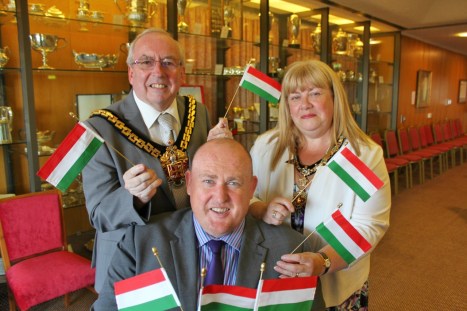
Back at Sárkány Péter’s office at Szent László Gimnázium were able later in the week to also connect me and arrange a meeting at the Mayors Office of Kőbánya, Budapest’s 10th District. Where I discussed with the Mayor this social enterprise scheme.


The Mayor was extremely supportive and discussed with me how his office might support the project. The Mayor explained that primary school’s fall under the District Councils control and so he can support linking primary schools up easily, where secondary schools or High Schools are independent of the District Council, but he would be will to help where possible in this area also.
We also discussed the historical links between Kőbánya & Wolverhampton and he expressed his desire to ensure these links remain, develop and evolve in programs such as my social enterprise project. It was encouraging to come away from this meeting knowing that the Major’s of both Kőbánya and Wolverhampton are supportive.
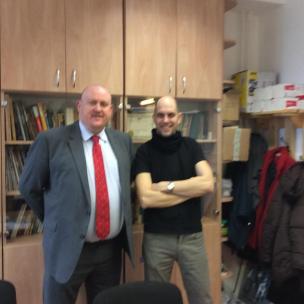
Another fascinating part of my visit was attending a local Teachers trade union meeting of one of the two Teaching Trade Unions in Hungary.
A teacher, who was also a trade union rep. at one of the schools I visited advised me that there are around 160,000 teachers in Hungary with about 1/6th or 30,000 being members of a trade Union, this relative low level of trade union activism is in part linked to the historical background of Hungary being governed by the Soviet Union and workers rights not being an important factor in Communist societies.
Also the education system has gone through radical change post 1989 by successive Governments and little time and energy has been spent on the consolidation of teachers’ working conditions and the establishment of a dialogue between the government and teachers’ representatives.
Added to the above the Teaching Unions of Hungary have been in the forefront of challenging the Right Wing Government of the day on its austerity programs, cuts to public spending and anti immigration policies.
Hungarian Trade Union Websites:
More detail on the Trade Union structure in Hungary:
http://www.worker-participation.eu/National-Industrial-Relations/Countries/Hungary/Trade-Unions
Next Steps:

As such my next steps are to continue to develop links between schools here and Budapest, so in the very near future (during the Summer term) I am delivering presentations to staff and assemblies to the children of three primary schools that wish to connect with primary schools in Kőbánya and sharing with them my school links.
I am also meeting with two Headmaster’s of primary schools that have expressed an interest in twinning and connecting through this social enterprise project.
On a secondary school basis, three secondary schools are now in discussion with building links with schools in Kőbánya.
I am also delivering talks to Business organizations throughout Wolverhampton on how this project came about and how they might support it in the medium to long term.
I also hope in a manner of collective solidarity to invite teachers from Hungary to our National conference in 2018 to discuss and share more of their circumstances with colleagues, and having raised this I have been advised that my proposal has been received by my Unions National Executive and feedback has been encouraging.
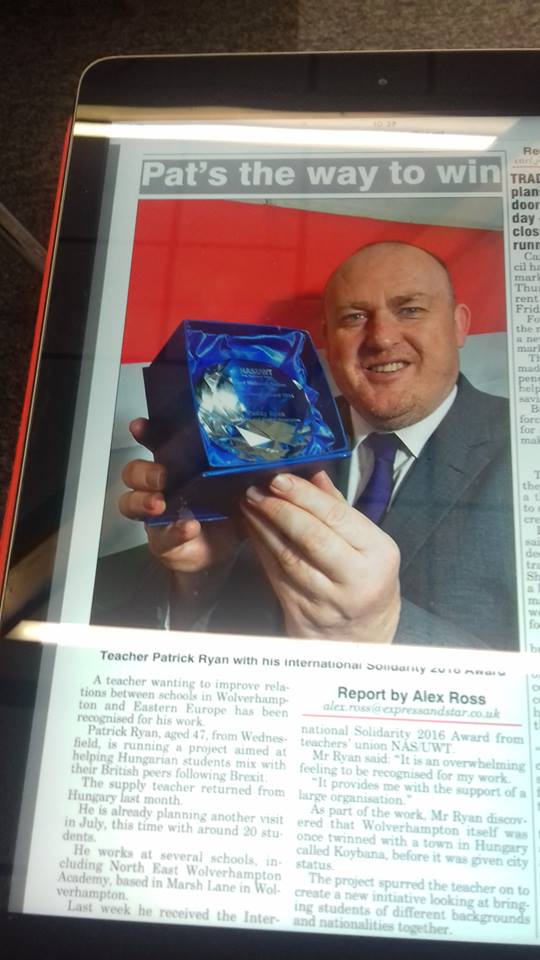
Regional press have again covered this project and reported on this visit and the teaching award I was recognized with regards to creating this social cohesion project earlier in the year.
As such I returned from Budapest full of hope and optimism that my social enterprise project can in part reduce community tensions, connect schools, staff, students together, help the sharing of knowledge and support the links that we already have and build and expand these further.
Bobby Kennedy is his famous ‘Ripple of Hope’ talk against apartheid in South Africa in 1966 stated:
“Each time a man stands up for an ideal, or acts to improve the lot of others, or strikes out against injustice, he sends forth a tiny ripple of hope, and those ripples build a current which can sweep down the mightiest walls of oppression and resistance”
And I believe my social enterprise project is my attempt to send forth a tiny ripple of hope, and for all those who have supported me in kind words, support both financial and otherwise I thank you.


 PJR Education Consultancy
Excellent networking and brilliant trip.
This is what our PMR should include, to help us encourage better teaching, not bullying us into doing their jobs! Well done Paddy 🙂
LikeLike
K2202 – Many thanks for you kind comments and I agree with your point on PMR.
LikeLike
Well done, Paddy. You have kept us informed (and entertained!) from te start of this project and I am so pleased to see such positive results already. I look forward to seeing how it develops.
LikeLike
Hello Patrick
Since I couldn’t find any e-mailadress or contact information I’ll ask my question through the comment section in the hope you get notified about this some way or another.
I’m a Social Work student from Belgium and in a couple of weeks we’re visiting Budapest with a group of students for an international project. More specifically we’ll be researching the liveability of the Kobanya district, in social work related terms of course. Our initial focus will be on the accessibility of culture to the people who live there. I say initial because we’re still in the early stages and who knows our visit will change the focus of our research.
Since we’d rather not go in blind we went online to look around for interesting information, organisations…
Seeing how you have been to Budapest recently and the social relevance of your project I thought you might have some interesting leads for us?
It would be great if you were willing to exchange some of your information, contact persons/organisations and even general impressions of Kobanya. It would most certainly be interesting from your point of view as a teacher. I believe that would give us a great head start into our research and discovery of Kobanya!
Long story short, we’re looking for a solid starting point so we can contact people and organisations in Kobanya and perhaps meet up once we’re there.
Thanks in advance.
Yours sincerely,
Lukas Van holen
LikeLiked by 1 person
Lucas, email me on patrickryan50@hotmail.com
LikeLike
Patrick are you back in Hungary, how can my school get involved?
LikeLiked by 1 person
Hi Betty, yes I am still working & connecting with schools in Hungary & have been volunteering this summer, PM me & I will discuss further on how you/our school can get involved.
LikeLike