

I have always liked to set myself objectives within my teaching career to ensure I constantly stretch and challenge myself in an effort to improve my teaching pedagogy.
At the beginning of my teaching career I became aware of the Walter Hines Page scholarship (WHPS) which is available to teachers to enable them to visit America for the purpose of undertaking research on a specific aspect of the American education system which is of interest to them and is relevant to their job.


It is something that I have always wanted to apply for but external circumstances such as having a young family, building a career etc. has meant it has been not until recently that I was in a position to explore this opportunity further.
Organised by the English Speaking Union (ESU), the (WHPS) aims to promote the exchange of ideas, understanding and knowledge between Britain and the United States of America.
The English Speaking Union (ESU) was founded by writer and journalist Sir Evelyn Wrench after the First World War, he felt that if the world was able to communicate more effectively, global understanding between nations would need to improve.


Walter Hines Page was an American journalist, publisher and diplomat. He was the American ambassador to the UK during the First World War. Walter Hines Page was one of the key figures involved in bringing the United States into The First World War and overturning their policy of isolationism as he believed that the United Kingdom was fighting a war for democracy.
https://en.wikipedia.org/wiki/Walter_Hines_Page
https://history.state.gov/milestones/1937-1945/american-isolationism


As such before I applied I approached the ESU and discussed with their officers what the scholarship specifically required from me, to help me gain a clear understanding of what I would be undertaking should I apply.
The officers at the ESU were fantastic, they fielded all of my enquiries, directed me to previous WHPS reports and discussed with me how I might approach the logistics of putting together a research proposal which was a requirement of the application process.
An example of a report supplied to me by the ESU was from a lady who travelled to America just at the commencement of World War 2.
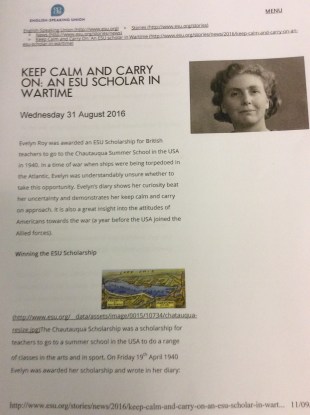
http://www.esu.org/stories/news/2016/keep-calm-and-carry-on-an-esu-scholar-in-wartime
This report reflected to me the historical significance of the WHPS, and how if I applied and was successful I would become a part of a rich background of WHPS Alumni, as another part of the Scholarship is to produce a report of your trip once completed for future applicants to review.
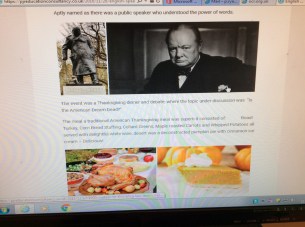
I also attended various ESU events whereby I was able to meet alumni and discuss educational issues affecting The United Kingdom and America, one such event was the ESU’s Thanksgiving dinner and debate which you can find my full report on at:
My teaching union the NASUWT were also invaluable in helping me appreciate both the requirements of the Scholarship and supporting me with connecting with educational professionals and educational organisations in America, such as the National Education Association.
(All three teaching unions select candidates from their membership every year to be put forward for interview at the English Speaking Union head-quarters)
From my research and discussions with both the NASUWT and ESU I felt very confident applying and this led me to arriving at ESU Head-quarters in London one sunny Wednesday afternoon in June 2016.


The interview panel was made up of representatives from the teaching unions and officers from the ESU and for around 30 minutes they discussed with me my research proposal, my planned itinerary and my hopes for what I wanted to achieve if I was successful.
I explained my research proposal was based around the UK introducing “British Values” into the national curriculum and compare this with how various American States deliver “American values” through their Spiritual Moral, Social and Cultural (SMSC) programs in their individual State curriculums.
My Itinerary:
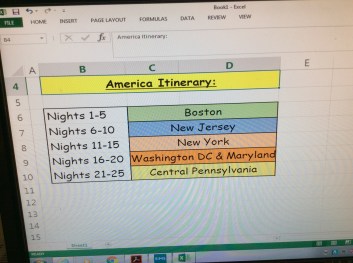
Would take me down the East Coast of America beginning in Boston, then visiting New Jersey before moving onto New York. Further travels would take me along the East Coast to Washington D.C and finally State College, visiting 6 States in total these being Massachusetts, New Jersey, New York State, Washington D.C. Maryland and Pennsylvania.
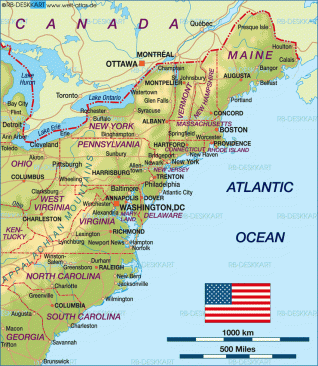
Below are the State flags for Massachusetts, New Jersey, New York Washington DC Maryland and Pennsylvania.


My plan is to report on my time in these various cities and States with a separate blog for each city, beginning with this first blog related to Boston, please return for further blogs on New Jersey, New York, Washington DC, Maryland and Pennsylvania.
Boston:
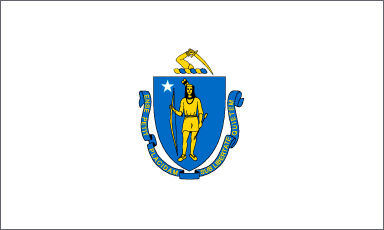
Boston is one of the oldest cities in the United States, founded in 1630 by Puritan settlers from England. It has several key locations and events linked to American history and the American Revolution such as the Boston Tea Party, Battle of Bunker Hill and the Siege of Boston, it was also the first city in America to have a public park, Boston Common in 1634 and the first city in America to have a subway system opened in 1897.


I selected Boston because the city has historical links with the immigration of people into America, beginning with the Puritan settlers at Plymouth Rock through to modern times and modern Boston is a diverse multicultural society.
Having flown from Heathrow on a early morning flight I arrived in Boston at Logan international airport lunchtime that same day, I flew with Delta airlines who were fantastic with superb inflight entertainment however I was too excited and a little nervous thinking of where my research would take over the coming weeks.
I had made arrangements to visit both Boston University (BU) to speak will staff and assess their SMSC programs and to visit the Jeremiah E Burke High School to meet with students and the staff faculty.
Boston University:


I travelled over to BU using Boston’s metro system to meet with staff from the BU “African Studies Centre Outreach Program”. They aim to promote the teaching of Africa & African culture in U.S. schools through the creation of teacher resources (lesson plans, student activity kits, a well-stocked physical and online library, professional development workshops, and much more.
I had been collaborating with the African Studies Centre before my visit to America who were appreciative of the global approach to several of my earlier blog posts and had invited me to participate with a “twitter #global-ed-chat” they had organised last year, which broadly covered my research parameters.
I was able to discuss with them why there is a need to provide schools with an Outreach program and dedicated resources on Africa and African culture and review some of the materials they provide within this context.
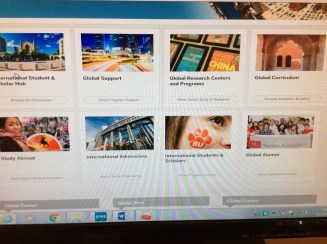
The program was set up to support schools that did not have the financial backing to provide Black History, African history and culture within their SMSC curriculum yet who have a large African -American student cohort and to support some of these students who may not have been exposed to or aware of this before. Secondly it was set up to support and connect students to their wider University programs such as BU’s Global Curriculum with the objective to link students to further education and study programs.
Jeremiah E Burke High School:
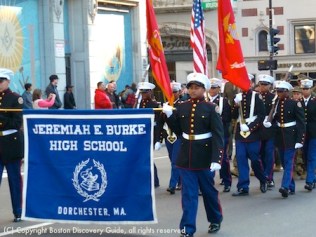
I was fortunate to be visiting ‘JEBHS’ and attending on one of their SMSC cultural field trips to Fenway Park the home of the Boston Red Socks baseball team.


Baseball and sports play a significant role in American society and with the Boston Red Sox being the City’s baseball team since 1912, the team has long been a symbol for cross cultural support and a way to unite students from different ethnic, cultural and economic backgrounds.
Students were visiting Fenway Park, the home of the ‘Sox to take a tour of the stadium, assess how it has changed over the last 100 years and how it reflects the story and growth of Boston itself.
The stadium offers educational tours for student groups with the focus on baseball players from many different countries and ethnic groups that have played major league baseball and played for Boston. It also focuses on how baseball dealt with segregation and other civil rights movements through American history.
it was a very insightful and creative way to build SMSC into the students study programs.
Both ‘BU’ and ‘JEbhs’ recommended I visit the Massachusetts State House as this plays a significant role in their SMSC programs, with students lobbying politicians on equality and civic issues, being involved with youth political programs and utilising the historical and cultural library materials it houses.
Massachusetts State House:
The Massachusetts State House, is the seat of government for the Commonwealth of Massachusetts and is located in the Beacon Hill neighboured of Boston. The building was completed in January 1798 and has been recently designated an American historical landmark. The building dominates the downtown Boston skyline as the dome is gilded in 23k gold topped with a wooden pine cone, symbolizing the importance of Boston’s lumber industry during early colonial times.


I took a guided tour of the State House and was able to visit the debating chambers and observe the building going about it business, with various school groups also visiting on the day as part of their SMSC programs, one interesting part of the building and title for this blog was the significance of a wooden cod over the main debating chamber.


The Sacred Cod is a four-foot eleven-inch carved-wood effigy of an Atlantic codfish, which refers and acts as ”a memorial of the importance of the cod fishery in the welfare of this Commonwealth”
In 1933 the Sacred Cod was briefly “Cod-napped” by editors of the Harvard Lampoon, a topical University publication, it was recovered after an extensive police investigation which included dragging the Charles River and the use of search and research airplanes.
Since then the protection of this State emblem has been paramount as it is believed the success of the State resides with the Sacred Cod remaining in place.
South Boston:
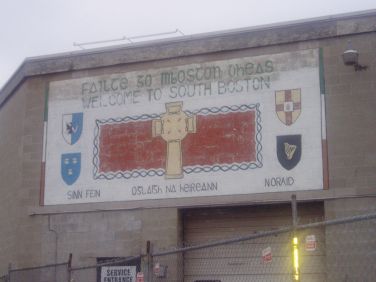
Being from an immigrant family myself who relocated from Ireland in the late 1960’s to the United Kingdom I was personally aware of the connections many Irish families have with Boston.
Boston was one of the major cities Irish families emigrating to America settled in and I wanted to see how a traditional working class neighbourhood populated by immigrants has evolved over time.
South Boston or ‘Southie’ is a densely populated neighborhood of Boston, It was once a predominantly working class Irish Catholic community. The area is rich in American history it contains for example Dorchester Heights, where George Washington forced British troops to evacuate during the American Revolutionary War.
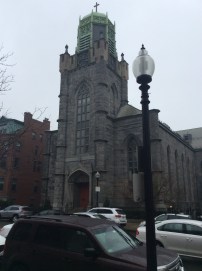
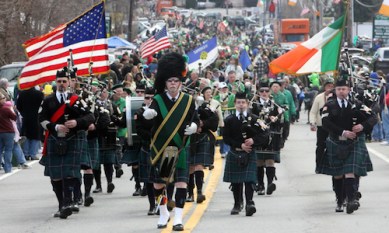
South Boston is also home to the St. Patrick’s Day Parade, a celebration of the Irish-American culture and this parade was supported by Senator John F. Kennedy in 1958. The Kennedy family were well known as participating in this parade. Robert F. Kennedy marched in 1968, Ted and Joan Kennedy also marched in 1970. The N.A.A.C.P entered a float in the Saint Patrick’s Day Parade in 1964. In the mid-1960s the Harvard’s Irish Society joined the march. Irish nationalists unofficially marched in the Saint Patrick’s Day Parade in the 1960s and 1970s. In 1972, Irish Republican Aid Committee members protested violence in Northern Ireland by carrying a coffin draped with the Irish tricolored flag. The Boston chapter of the Irish Northern Aid Commission marched with black armbands and a sign reading “England Get out of Ireland”
Gentrification of Southie:
South Boston has over the last 15- 20 years experienced radical gentrification, this being the process of renovating and improving a house or district so that it conforms to middle-class taste, in doing so forcing out the long established residents who cannot afford the increased rent and living costs.
Walking through South Boston you would not feel you are in a working class neighbourhood, with many new bars, clubs and exclusive eateries. I went with colleagues who grew up in South Boston and have lived through this change and have since moved or were economically forced out of the neighbourhood.
We visited one of the few remaining Southie bars this being Croke Park or “Whitey’s” a traditional Irish working class bar.
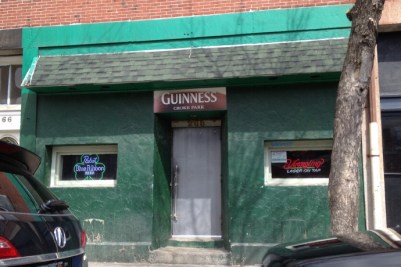
A fantastic night ensued which I broadly remember!
Cheap beer, shots and free pool surrounded by colourful characters who all agree in another 3 to 5 years the bar will be gone from the neighbourhood. The general consensus was as gentrification increased in the neighbourhood the history and culture built up through generations of immigrants has been lost in less than one generation.
The following morning as I was leaving Boston for New Jersey I heard the Drop kick Murphys playing “I’m shipping up to Boston” and thought it aptly summed up my time and experiences in the city..
Many thanks for visiting my blog and reading my first of six reports on the cities I visited on my WHPS.
Please feel free to leave a comment and your thoughts in the comments box at the bottom of this post.
Next Up ‘Visiting The Garden State, New Jersey – Home of Tony Soprano”
 PJR Education Consultancy
Hi Paddy , Just read the first part of your amazing Massachusetts /Boston WHPS journey. As well as been thoroughly interesting, informative and insightful into what you were researching and who you were engaging with on this trip, it felt as if I’d had a great shanigans night out downtown at Corke Parke or was it ‘Whitey’s ‘ by end of your time of Stage 1 ready for Stage 2! Great music by the way..The Drop Kick Murphys ! .. Pat
LikeLike
Your Boston blog. That was fun! It’s one American city I have never visited and just learned tons of information by reading about your experiences!!! Isn’t it wonderful that we can connect to students through things they enjoy and bring history to life?? I never imagined using Fenway park to discuss segregation and the US civil rights movement. The US is a country of immigrants, but some people tend to forget that – Danny Florida
LikeLike
Brilliant work – thanks for sharing. Lala
LikeLike
Excellent work and many thanks for creating and sharing that looks a wonderful opportunity, I shall be exploring this myself – thanks again Shelia
LikeLike
Great night in Whity’s, come back soon to Boston bro – Southie rules – Fegus
LikeLike
Thank you for showing the great State of Massachusetts and my home city of Boston, your comments on gentrification were insightful and very true, Southie was bad but South End was gentrified to any ever larger extent..Shaun Boston
LikeLike
Excellent blog on Boston I took so much from your report and it gave many things to consider with regards to my own Schloarship application not least the logistics- thanks again and love the music at the end
LikeLike