I intend to reflect how the Prevent policy is fundamentally flawed when designed by the UK New Labour Government and this is recognised (Parliament, 2010) where Prevent is described as “the least developed strand of CONTEST” this policy now two decades old is widely acknowledged by virtually all key stakeholders as unfit for purpose as highlighted by The Muslim Council of Britian (2023) who state:
“There are serious concerns about discrimination in the implementation of terror legislation”.
This brief will identify using an evidence-based approach what I consider are the pressing issues for policy reform around the Prevent arm of CONSENT. The primary role being a statutory requirement that all education settings must deliver to ensure young people are not drawn into or supporting terrorism and from this how young Muslim males ranging from primary school age to college settings (5–18-year-olds) are being profiled based around specific religious and cultural backgrounds causing greater levels of friction and tension in their communities.
This policy brief will highlight that Prevent:
- Requires radical reform to address a policy that was poorly designed and has been heavily criticised by Civil liberty groups, Education trade unions and successive Governments.
- Any reform must address the inequalities around educational referrals and these be should refined to consider various factors before proceeding to a Channel case.
- Prevent reform must address the concerns that the policy is discriminatory and Islamophobic and take into consideration the wide-ranging concerns of all communities and stakeholders to deliver a trustworthy Government policy that addresses terrorism and security needs.
Fundamental Issues with the existing policy:
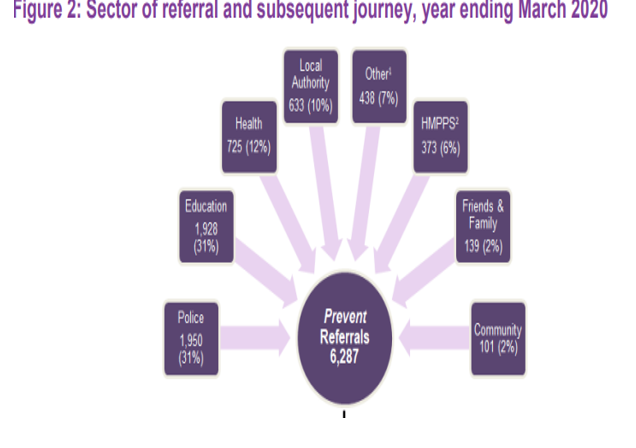
The UK Government records and monitors the number of referrals passed onto them for action, where an individual is deemed at risk of radicalisation this is known as a Channel referral, in 2015/16 through to 2019/2020 education settings made up the largest proportion of referrals from all sectors of society including: the Police, Healthcare, Local Authority, HM Prisons and family and friends being the other referring agencies.
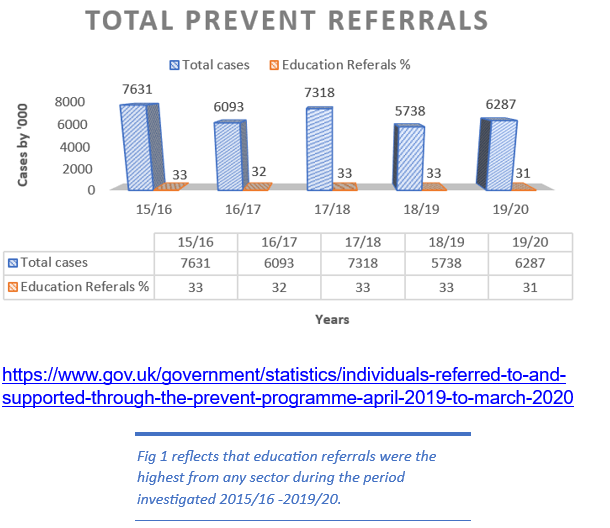
When we consider all the other reporting agencies reflect a referral reporting percentage of 2% to 12% HM Government data reflects education settings are reporting far greater numbers of students than any other referral body.


Leave a Reply